Before 9,000 years ago
People in southwestern Mexico gathered, tended, and selected teosinte populations. Domestication was a relationship unfolding through repeated choices—not a single invention.
Heritage profile · 12Southwestern Mexico
Zea mays · maize · corn
The grain at a glance
“A grass transformed through generations of observation, selection, exchange, and care.”
Origin & landscape
Maize was domesticated from teosinte in Mexico. Genetic, botanical, and archaeological evidence point especially to southwestern Mexico and the Balsas watershed, where seasonally dry tropical landscapes still hold wild relatives.
Early domestication did not instantly produce the cobs familiar today. People carried partly transformed maize into new regions, and farming communities continued shaping it through movement, exchange, hybridization, and locally specific selection.
Language atlas
Names may identify the crop, an ear at a certain stage, a kernel type, a landrace, a dish, or a ceremonial relationship. Language reveals precision that “corn” alone cannot.
Maize is the globally useful crop name; maíz entered Spanish from Taíno. Corn has broader historical meanings in English, so this atlas uses maize when botanical precision matters.
A Nahuatl term for maize grain. Related words distinguish the plant, tender ears, preparations, and stages of growth; one English label cannot carry that vocabulary.
A widely used Mexican and Central American word for a tender ear of maize, from Nahuatl elotl. It names a stage and food context rather than the species alone.
A term used across parts of South America for tender maize and its kernels. Varieties, cooking methods, and meanings differ by place.
A Quechua name connected to Andean maize traditions. Maize diversity in the Andes reflects long local selection after the crop moved south.
Working chronology
People in southwestern Mexico gathered, tended, and selected teosinte populations. Domestication was a relationship unfolding through repeated choices—not a single invention.
Starch grains and phytoliths from the Central Balsas region provide early evidence of domesticated maize. The evidence is microscopic, and chronology remains a working interpretation.
Maize moved through many landscapes and communities. Farmers selected for day length, altitude, rainfall, kernel, color, texture, storage, taste, and ceremony, creating extraordinary diversity.
Colonial exchange carried maize around the world. New African, European, and Asian foodways became locally rooted, while Indigenous American histories remained foundational.
Living foodways
Maize becomes food through skilled transformation. Variety choice, shelling, soaking, grinding, fermenting, wrapping, roasting, and steaming carry knowledge that nutrition tables cannot describe.
Cooking maize in an alkaline solution changes aroma, texture, workability, and nutrient availability. Grinding produces dough for tortillas, tamales, and many locally distinct foods.
Fresh ears, dried kernels, hominy-like preparations, soups, and stews depend on variety and harvest stage. “Maize” does not name one culinary ingredient.
Ground maize enters porridges, atoles, fermented drinks, and regional staples across the Americas and beyond. Similar techniques do not make their histories interchangeable.
Material witness
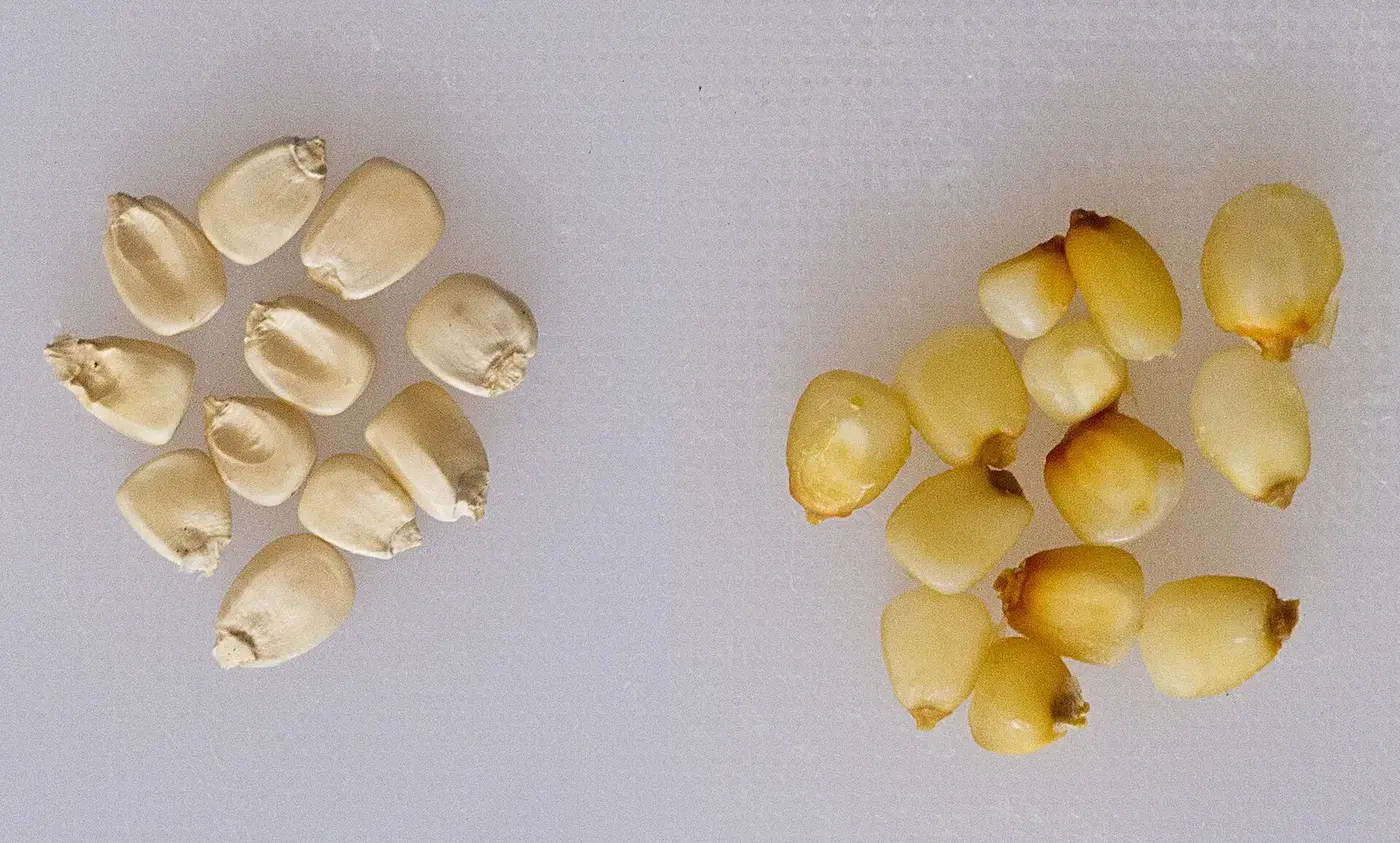
The process image makes nixtamalization materially legible while keeping a single Salvadoran preparation distinct from the many maize foodways of the Americas.
Nutrition & evidence
Maize supplies carbohydrate, protein, fibre, minerals, and plant compounds, but composition varies with variety and processing. Whole kernels, nixtamalized dough, refined meal, sweet corn, oil, and sweetened products are nutritionally different.
Research trail
Last editorial review · August 2026 Read the sourcing method →
Continue exploring
