Tef was domesticated in Ethiopia, its principal centre of diversity.
Heritage profile · 02Ethiopian & Eritrean Highlands
Teff
Eragrostis tef
ATLAS PLATE 02
FamilyPoaceaeFormAnnual cereal grassNative rangeNortheastern & eastern tropical AfricaCollectionDG–TF–002
The grain at a glance
“A seed almost weightless; a food culture of immense depth.”
OriginEthiopian HighlandsKnown forTiny seed and broad landrace diversityUsed asInjera, porridge, beverages
01
Origin & landscape
Made by a highland.
Kept by its farmers.
Tef was domesticated in Ethiopia, where generations of farmers shaped a cereal able to inhabit varied elevations, soils, rainfall patterns, and cultural landscapes. Ethiopia remains its principal centre of diversity.
The crop’s minute grains are difficult to identify archaeologically. DivineGrains therefore distinguishes the secure botanical and genetic picture from dates that remain actively debated.
Language atlas
One grain,
living voices.
Tef and teff are both established spellings. Local scripts and names belong to distinct language communities; transliteration can vary.
01
Tef
Common scholarly and Ethiopian spelling
02
Teff
Widely used international spelling
03
ጤፍ
Amharic script · Ethiopia
04
Xaafii
Afaan Oromo · Ethiopia
A working chronology
Archaeobotanical finds show tef moving across the Red Sea; its earlier chronology remains under study.
Millions of Ethiopian farms continue to cultivate a remarkably diverse crop and food tradition.
Living foodways
Fermented,
baked, shared.
Tef is inseparable from the social life of injera: a fermented, soft flatbread that is both food and shared surface for a meal. Its use also extends to porridges, home-brewed beverages, and blended preparations.
Injera
Fermented batter is baked into a soft, porous flatbread whose texture carries sauces and stews.
Genfo
A thick porridge tradition, prepared in different forms and served in domestic and ceremonial settings.
Tella
Grain traditions also enter local fermented beverages; methods and ingredients vary by community.
Material witness
Field,
grain, table.
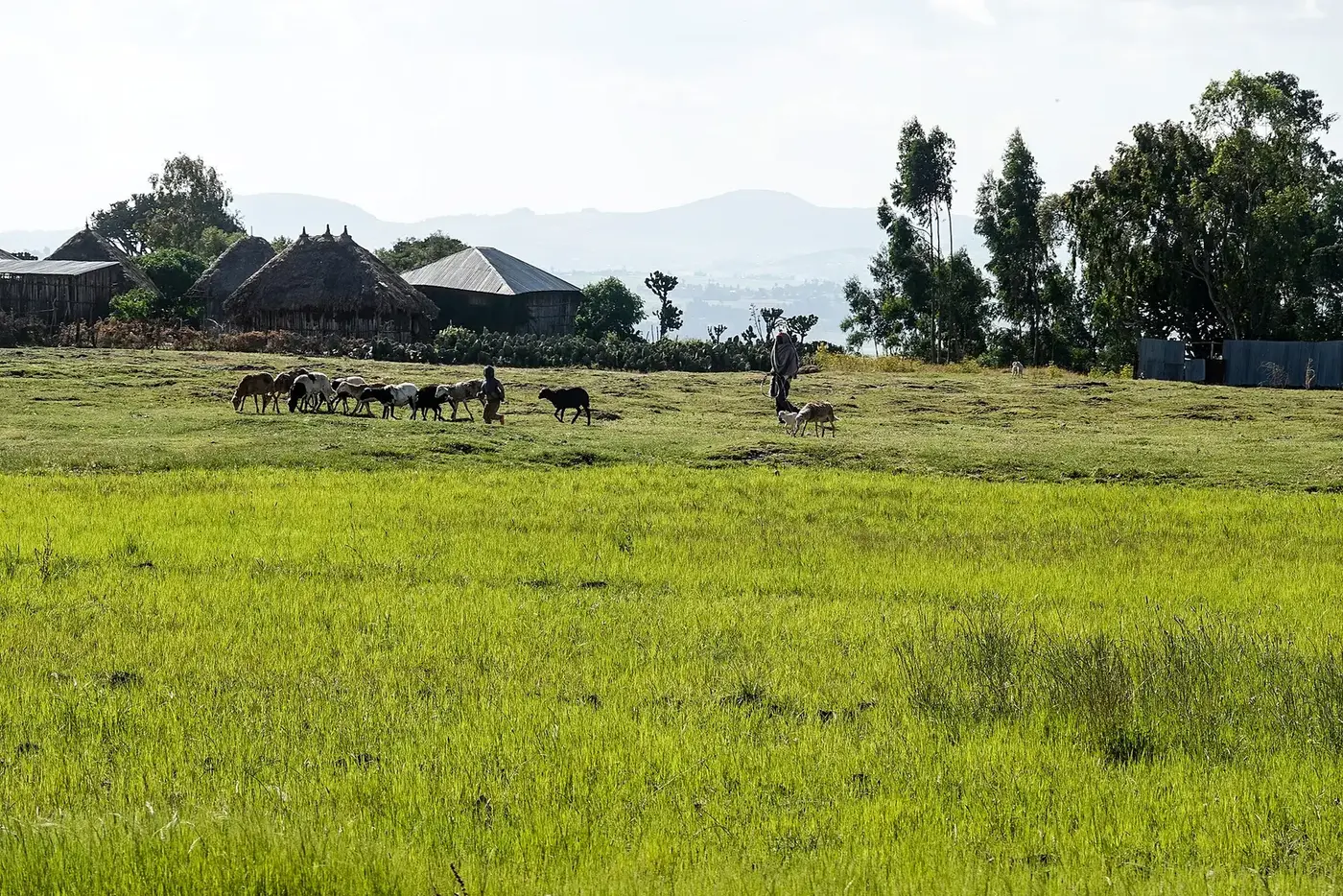
A named landscape keeps the crop connected to the highland fields where it is grown, rather than turning teff into an abstract ingredient.

Nutrition & evidence
Whole grain.
Whole context.
Tef is naturally gluten-free as a species and is commonly eaten as a whole grain because its seed is so small. Nutrient composition varies by variety, soil, milling, fermentation, and recipe; prepared injera is not nutritionally identical to raw tef flour.
Editorial standardDivineGrains reports composition, not cures. People with coeliac disease should still choose products protected from gluten cross-contact.
Research notes
Sources behind
the story.
- Kew Science — Plants of the World Online ↗Accepted taxonomy, life form, and native geographic range for Eragrostis tef.
- Plaza-Wüthrich & colleagues — Frontiers in Plant Science ↗Origin, genetic diversity, crop biology, and Ethiopian germplasm research.
- Neela & Fanta — Injera review, indexed by FAO AGRIS ↗Traditional fermentation process and injera’s place in Ethiopian foodways.
- Mekonnen & colleagues — crop domestication and spread review ↗Current synthesis of genomic and archaeobotanical evidence, including uncertainty in early chronology.
Continue exploring