Cultivation history is inferred from crop diversity, language, and genetics; direct archaeological evidence is still sparse, so claims of a single ancient date should be treated cautiously.
Heritage profile · 06West Africa
Fonio
Digitaria exilis · white fonio
ATLAS PLATE 06
FamilyPoaceaeFormAnnual cereal grassNative rangeWest tropical Africa to CameroonCollectionDG–FO–006
The grain at a glance
“A very small grain carried by precise timing, patient hands, and many local names.”
OriginWest AfricaFocus speciesWhite fonio · Digitaria exilisUsed asSteamed grain, porridge, flour, drinks
01
Origin & landscape
Small grain,
wide savanna.
White fonio is an Indigenous West African cereal whose native range extends across western tropical Africa to Cameroon. It grows within diverse savanna and farming landscapes; no single ecological slogan can describe every variety or community that cultivates it.
“Fonio” can also refer to black fonio, Digitaria iburua. Recent genetic research indicates that white and black fonio arose through independent domestication histories. This profile centers white fonio and names the distinction wherever it matters.
Language atlas
One name,
two crops.
Common names shift across languages, markets, and research traditions. “Fonio” may gather distinct species under one label, so botanical identity and community usage should be recorded together.
01
Fonio / Foño
A widely used name, including French and Wolof-linked forms; spelling varies across languages and publications.
02
Acha
A name widely used in Nigeria and neighboring areas for cultivated fonio grains.
03
Findi / Fundi
Names used in parts of Senegambia and in English-language records.
04
Iburu
A name associated with black fonio, Digitaria iburua—a related but separately domesticated crop.
A working chronology
Recent genomic work places the expansion of cultivated white and black fonio near the period of the earliest reported archaeological remains in Nigeria, while showing separate domestication histories.
Farmers continue to maintain white fonio across West Africa for its timing, taste, ceremonial value, and fit within locally specific farming systems.
Living foodways
Threshed,
steamed, shared.
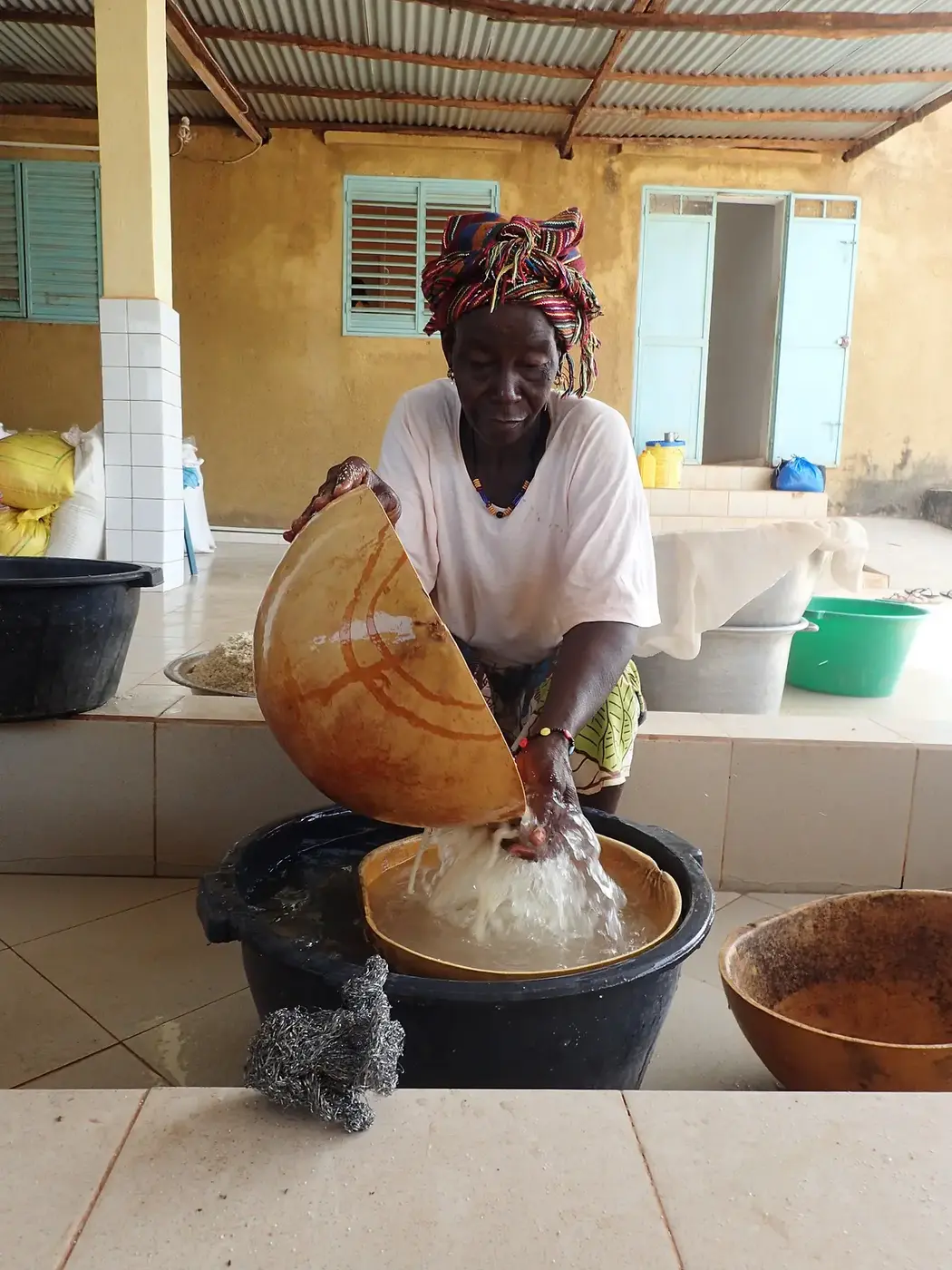
Fonio’s tiny grains make harvesting, dehusking, washing, and cleaning central to the food story. These are skilled transformations, often carried by household and community knowledge that commodity descriptions leave invisible.
Steamed grain
Prepared grains can be steamed into light, separate textures or granulated into couscous-like foods served with sauces.
Porridges & flour
Whole or milled fonio enters porridges, flour mixtures, and regionally specific preparations whose names and methods vary.
Fermented drinks
In some communities fonio is malted or fermented for beverages, linking grain handling with locally maintained microbial knowledge.
Material witness
Field,
grain, table.
Processing is part of the crop's material story. The photograph is locally named and does not generalize one workplace into all fonio traditions.

Nutrition & evidence
Beyond the
“miracle grain.”
Fonio supplies carbohydrate, protein, fibre, minerals, and other food components, but values depend on variety, dehusking, polishing, washing, fermentation, cooking, and serving size. Comparisons with other cereals require like-for-like laboratory methods and edible forms.
Editorial standardDivineGrains does not turn early maturity, dryland cultivation, amino-acid composition, or heritage into a guaranteed climate or health outcome. Those claims need defined conditions and evidence.
Research notes
Sources behind
the story.
- Kew Science — Plants of the World Online ↗Accepted taxonomy, annual life form, seasonally dry tropical biome, and native range for Digitaria exilis.
- Kaczmarek et al. — independent histories of two fonio crops ↗Genomic evidence for separate domestication and cultivation histories of white and black fonio, published in 2025.
- Archaeological and Anthropological Sciences — Sadia ↗Archaeobotanical context and the limits of the current material record for fonio in West Africa.
- National Academies — Lost Crops of Africa: Fonio ↗Regional cultivation, processing labor, food preparations, and historical research context.
Continue exploring